Blog Entries all / by tag / by year / popular
Powerful autocomplete with Redis in under 200 lines of Python
In this post I'll present how I built a (reasonably) powerful autocomplete engine with Redis and python. For those who are not familiar with Redis, it is a fast, in-memory, single-threaded database that is capable of storing structured data (lists, hashes, sets, sorted sets). I chose Redis for this particular project because its sorted set data type, which is a good fit for autocomplete. The engine I'll describe relies heavily on Redis' sorted sets and its set operations, but can easily be translated to a pure-python solution (links at bottom of post).
Update
Redis-completion is now deprecated. The autocomplete functionality, along with a number of other features, have been integrated into a new project walrus. Check out the walrus blog announcement for more details.
Working around Django's ORM to do interesting things with GFKs
In this post I want to discuss how to work around some of the shortcomings of djangos ORM when dealing with Generic Foreign Keys (GFKs).
At the end of the post I'll show how to work around django's lack of correctly CAST-ing when the generic foreign key is of a different column type than the objects it may point to.
Micawber, a python library for extracting rich content from URLs
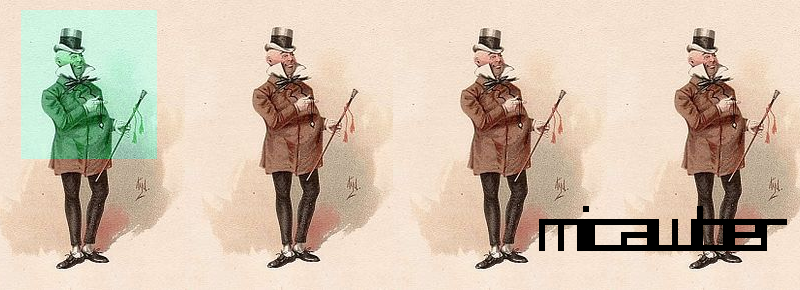
OEmbed is a simple, open API standard for embedding rich content and retrieving content metadata. The way OEmbed works is actually kind of ingenious, because the only things a consumer of the API needs to know are the location of the OEmbed endpoint, and the URL to the piece of content they want to embed.
YouTube, for example, maintains an OEmbed endpoint at youtube.com/oembed. Using the OEmbed endpoint, we can very easily retrieve the HTML for an embedded video player along with metadata about the clip:
GET https://www.youtube.com/oembed?url=https://www.youtube.com/watch?v=nda_OSWeyn8
Response:
{
  "provider_url": "https://www.youtube.com/",
  "title": "Leprechaun in Mobile, Alabama",
  "type": "video",
  "html": "<iframe width=\"459\" height=\"344\" src=\"https://www.youtube.com/embed/nda_OSWeyn8?feature=oembed\" frameborder=\"0\" allowfullscreen></iframe>",
  "thumbnail_width": 480,
  "height": 344,
  "width": 459,
  "version": "1.0",
  "author_name": "botmib",
  "thumbnail_height": 360,
  "thumbnail_url": "https://i.ytimg.com/vi/nda_OSWeyn8/hqdefault.jpg",
  "provider_name": "YouTube",
  "author_url": "https://www.youtube.com/user/botmib"
}
The oembed spec defines four types of content along with a number of required attributes for each content type. This makes it a snap for consumers to use a single interface for handling things like:
- youtube videos
- flickr photos
- hulu videos
- slideshare decks
- and many more
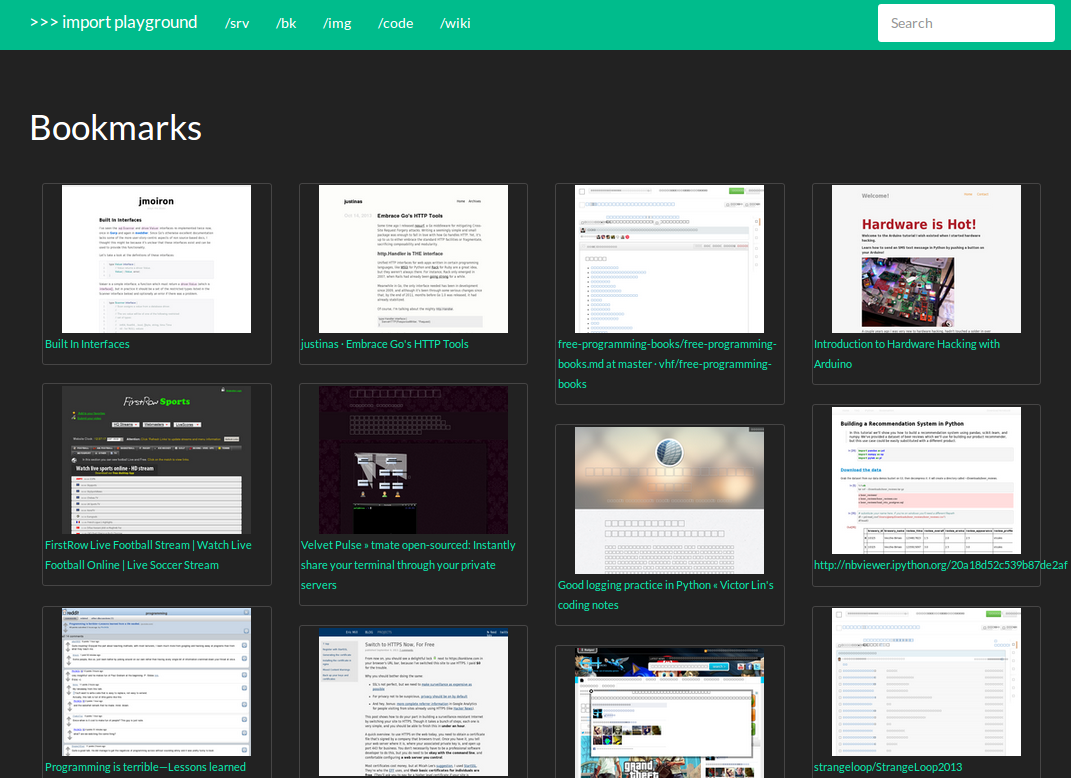
Building a bookmarking service with python and phantomjs
Using python and phantomjs, a headless webkit browser, it is a snap to build a self-hosted bookmarking service that can capture images of entire pages. Combine this with a simple javascript bookmarklet and you end up with a really convenient way of storing bookmarks. The purpose of this post will be to walk through the steps to getting a simple bookmarking service up and running.
Huey, a lightweight task queue for python
At my job we've been doing a quarterly hackday for almost a year now. My coworkers have made some amazing stuff, and its nice to have an entire day dedicated to hacking on ... well, whatever you want. Tomorrow marks the 4th hackday and I need to scrounge up a good project, but in the meantime I thought I'd write a post about what I did last time around -- a lightweight python task queue that has an API similar to celery.
I've called it huey (which also turns out to be the name of my kitten).

Design goals
The goal of the project was to keep it simple while not skimping on features. At the moment the project does the following:
- multi-threaded task execution
- scheduled execution at a given time
- periodic execution, like a crontab
- retrying tasks that fail
- task result storage
Backend storages implement a simple API, currently the only implementation uses Redis but adding one that uses the database would be a snap.
The other main goal of the project was to have it work easily for any python application (I've been into using flask lately), but come with baked-in support for django. Because of django's centralized configuration and conventions for loading modules, the django API is simpler than the python one, but hopefully both are reasonably straightforward.
Building a markov-chain IRC bot with python and Redis
As an IRC bot enthusiast and tinkerer, I would like to describe the most enduring and popular bot I've written, a markov-chain bot. Markov chains can be used to generate realistic text, and so are great fodder for IRC bots. The bot I am writing of has been hanging out in my town's channel for the past year or so and has amassed a pretty awesome corpus from which it generates messages. Here are few of his greatest hits:
Using Flask blueprints to build a bookmarking app, a pastebin and a wiki
For a change, I've been doing all of my new app development using flask, a python web framework built atop the werkzeug WSGI toolkit. Having used django for the last two years it's been fun to do something different, but at the same time stick with python.
In this post I'd like to show a couple of the small projects I've written using flask over the past few weeks.
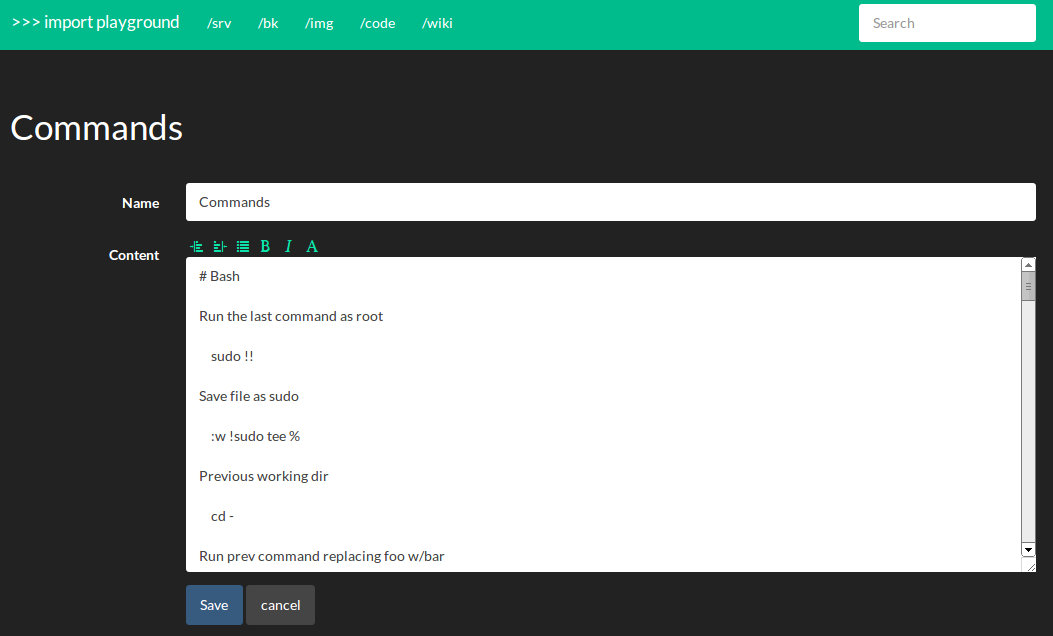
Redesign of flask-peewee admin
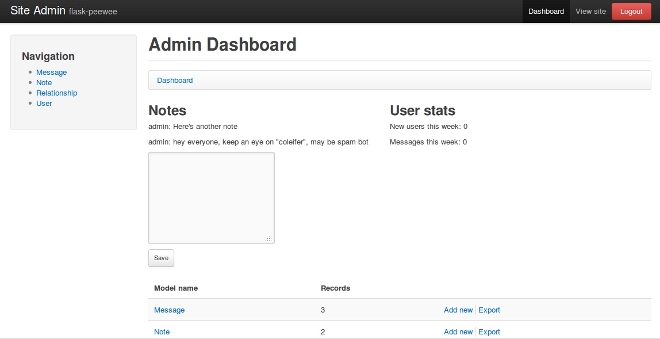
Recently I stumbled across the twitter bootstrap project, which is a set of cross-browser compliant stylesheets and scripts. I liked them so much that I've ported the admin templates to use bootstrap. Here's a little screenshot of the design refresh taken from the example app:
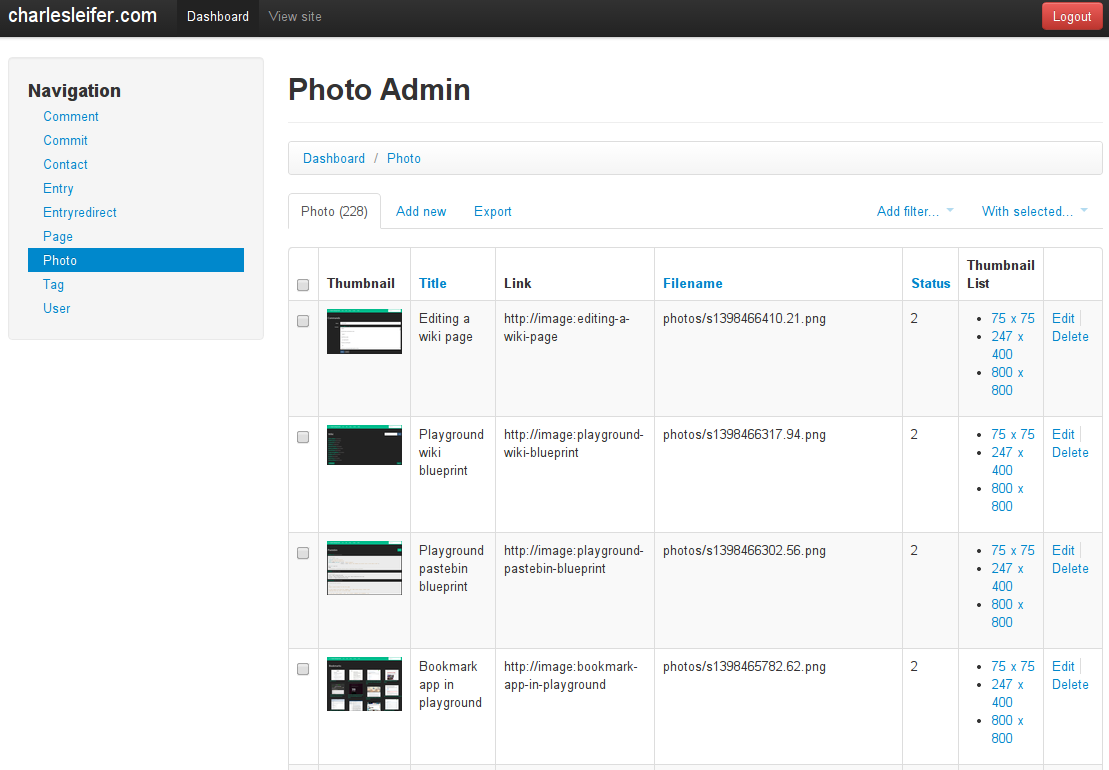
I hope this will make the admin easier to work with in the long-run!
Integrating the flask microframework with the peewee ORM
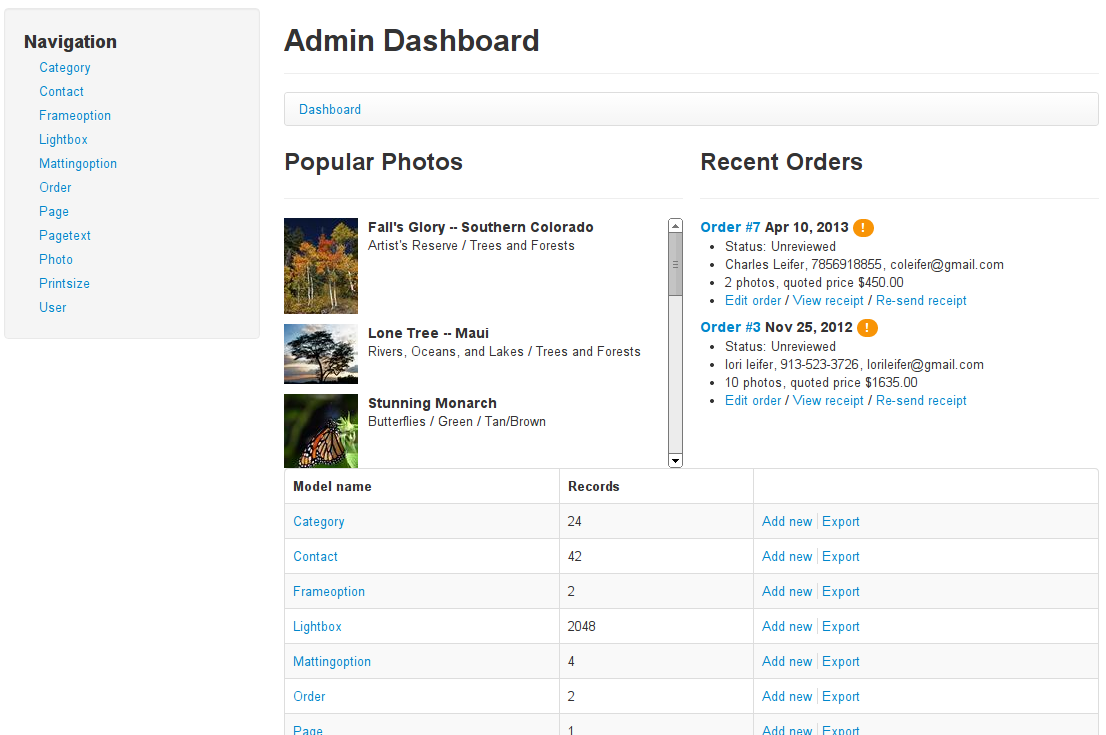
I'd like to write a post about a project I've been working on for the past month or so. I've had a great time working on it and am excited to start putting it to use. The project is called flask-peewee -- it is a set of utilities that bridges the python microframework flask and the lightweight ORM peewee. It is packaged as a flask extension and comes with the following batteries included:
- Admin interface a-la django
- RESTful API toolkit a-la tastypie
- Authentication system
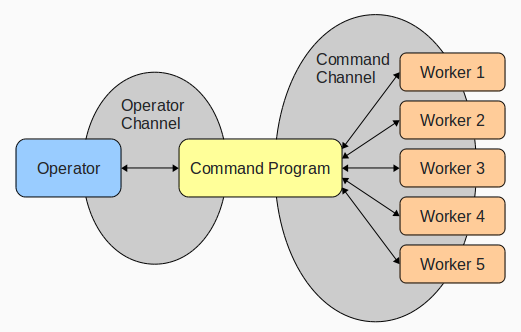
A simple botnet written in Python
As of this week we instituted a regular "hackday" at my office -- anything goes, you can work on whatever you like, so at 11:30 the night before the hackday started I decided on writing a simple IRC-powered botnet.