Ghost in the Shell: my AI Experiment
A man's at odds to know his mind cause his mind is aught he has to know it with. He can know his heart, but he dont want to. Rightly so. Best not to look in there. It aint the heart of a creature that is bound in the way that God has set for it. You can find meanness in the least of creatures, but when God made man the devil was at his elbow. A creature that can do anything. Make a machine. And a machine to make the machine. An evil that can run itself a thousand years, no need to tend it.
The 2024 Advent of Code contest was what first woke me up to the capabilities of AI for general-purpose programming. Advent of Code problems are wordy, filled with ASCII diagrams, data that often needs to be processed to get it into a usable data-structure, and they are generally more involved than a comparable leetcode-type problem. In 2024, for the first time, people using AI were scoring the top spots on the global leaderboard, which tracks the fastest solves. There was a lot of hand-wringing about AI use on the leaderboard, but the problem was clearly insoluble. Whether the people using AI were trying to build hype, or just wanted to grief the actually-competitive coders who do AOC, AI had achieved something momentous. For 2025 the global leaderboard was completely abolished.
(Interestingly, this problem seems like it gave the AI solvers a good deal of trouble.)
Over the course of 2025, looking over my ChatGPT history, I can see that I used it in tandem with books I was reading, in order to dive deeper into thematic elements, character analysis, and historical context. I found it generally did well, but with books I knew very intimately from having read them numerous times, I also saw where its analysis was shallow or lacking in some kind of emotional or experiential fluency. I found myself correcting its analyses at times in order to prod it to dig deeper in the "right" direction, but then it felt like it changed gears to just placating me - the depth I hoped for never materialized. It often sounded deep - verbose, confident, reassuring - but to my ear it was as sounding brass.
An aside about GNOME
The actual prompting event for this whole post happened at the end of 2025 around the holidays, when I updated my workstation to Debian 13 and Xfce 4.20. All of a sudden a whole bunch of GTK/GNOME shit that had been vaguely irritating me for years caused me to boil over. I couldn't take it anymore - and as much as Xfce exposes the best possible GTK desktop, the GNOME style seemed to be devouring more and more of the things I liked, turning them into huge, round, heavily padded blobs covered in kabbalistic symbols.

Burgers are back on the menu, boys.
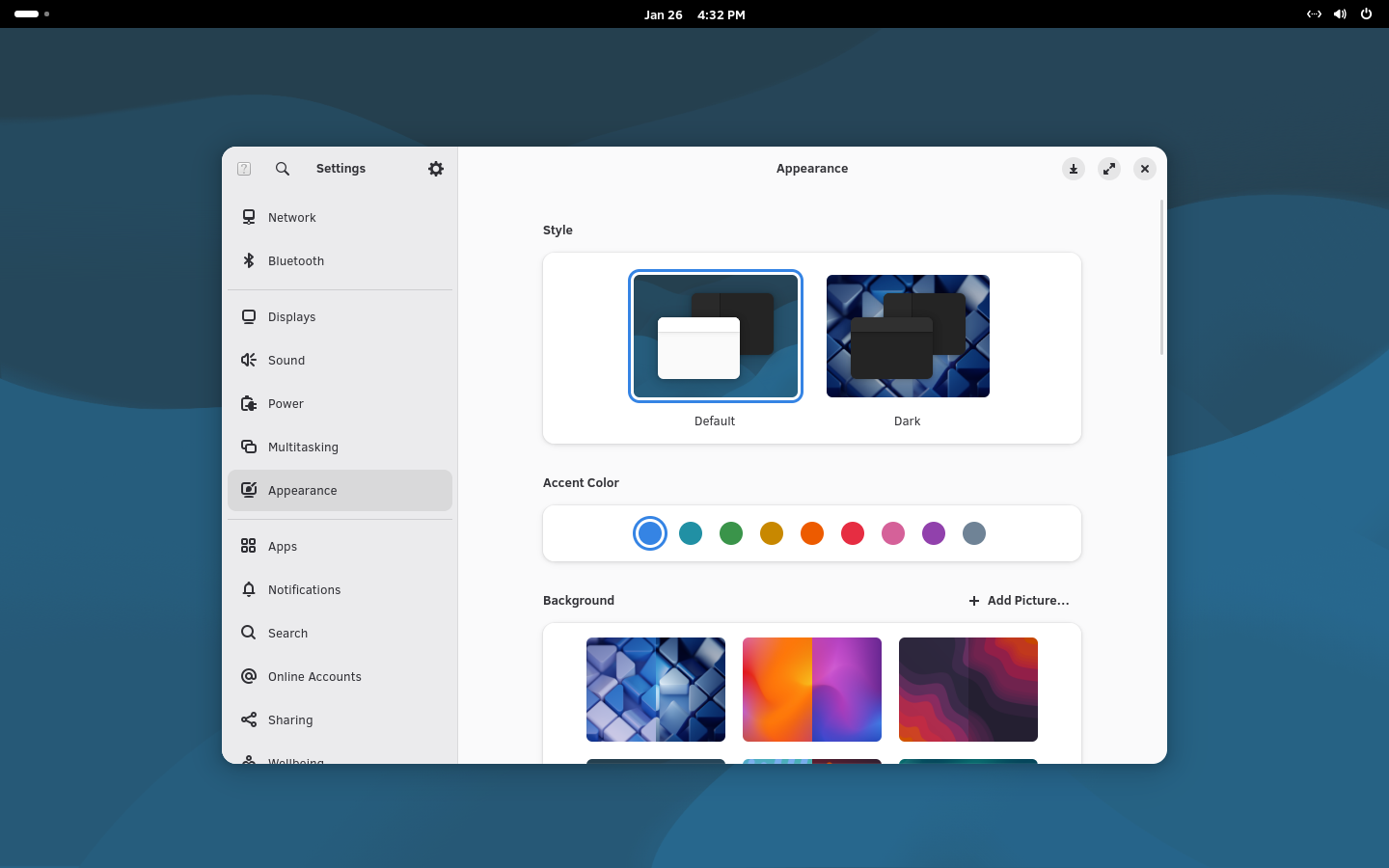
GNOME and GTK embody screenshot-driven-design. They've taken all the actionable controls and either stuffed them into hamburger menus or removed them entirely. This stance is coupled with an arrogance that could come only from the corridors of RedHat; a stance which proclaims that if users don't like it, then the user is wrong. Over the last 10 years, the implicit philosophy of "users are wrong" has grown to include "users must be protected from themselves". Settings and configurability have dwindled to a laughable state:
People will defend this.
This post explains GNOME better than I can, but it's clear that GNOME is fully-committed to this aesthetic and things will never go back to GNOME 2 levels of usability.
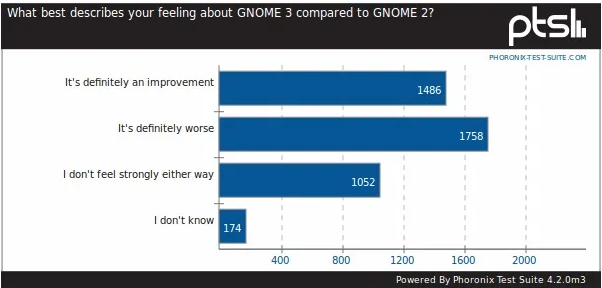
At one time the most popular image on /g/, probably.
As I began the new year, I decided to give KDE a try, and it has been a wonderful surprise. I have been so much more satisfied with Linux on the desktop since switching to KDE. It all works well, and I can configure it to match all my workflows, keybinds, and other things I've grown so used to over the years I feel crippled without them.
Back to the story
This is where AI makes its entrance. Over the years I'd developed a few Tkinter applications for my own personal use. They were generally monoliths of code, presentation and data-model heavily intertwined, and the product of many years of tinkering. When I wanted to build new functionality, I tended to add it in such a way as to minimize changes to the existing code, which might tumble the whole edifice in the process. The result was a collection of applications I used on a daily basis, often making half-hearted promises to myself I would "rewrite it, correclty this time".
A perfect example is the image viewer I wrote. Originally, all it did was display a listing of images in a directory down the left-hand side, and a pannable preview to the right. Over time I added different viewing modes which allowed toggling between full-resolution, fit to the display-port, or filling the display-port while preserving aspect ratio. I wrote a rather baroque class for managing the image list itself (the "model", I suppose) but it became hopelessly mixed-up with the main application to the point that they really should've just been one class.
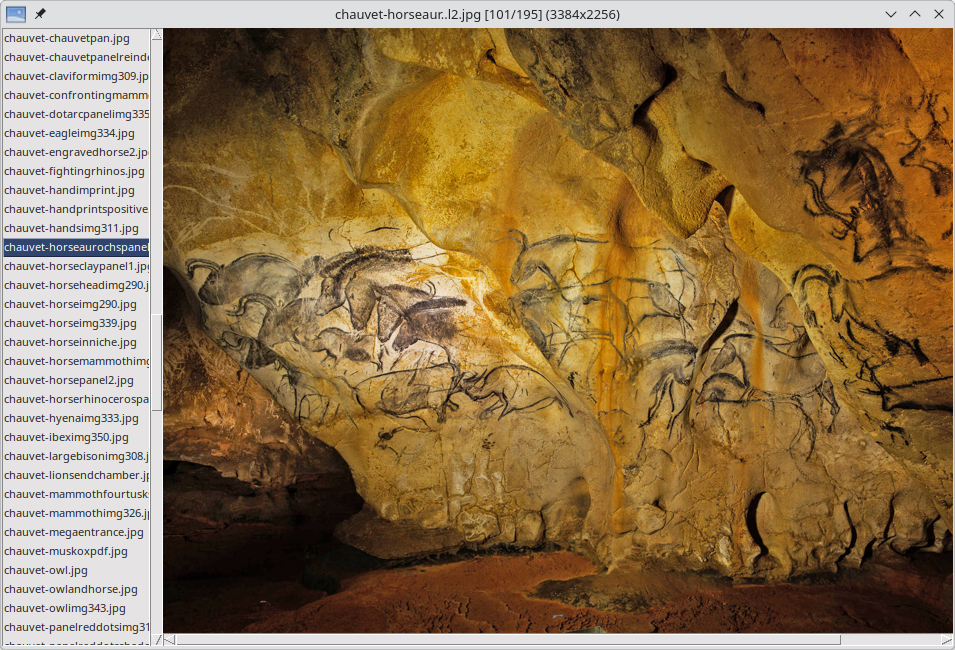
I found it cumbersome to scroll through the list of files, so I added a thumbnail gallery view later. This took a while to get right and it hardly used any of the existing code. I remember it took longer-than-expected trying to get the beveled outline around the focused image to display and update correctly. Eventually it worked, though, and it worked very well! It supports vim-style navigation and has quite a bit of functionality exposed via keybinds and context menus:
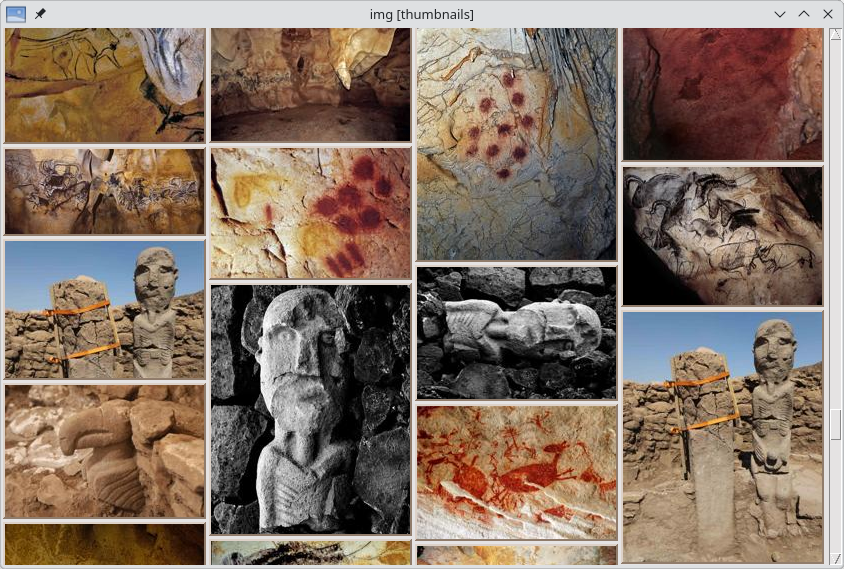
I thought: since I'm a KDE / Qt guy now, I should get rid of this Tkinter monster (it is ~1500 dense lines of code, not including another 1000 in a common helper module) and rewrite it to use PySide6. A toolkit-to-toolkit port seemed out of the question, given that my Tkinter codebase was both large and incredibly specific. The Tkinter canvas, used to do the thumbnail view, also seemed like it would be especially tricky to manage in Qt, due to the number of components I would need to learn to use. As soon as I started poring over Pyside6 tutorials, blog posts, and documentation, I became overwhelmed. Qt is huge, and I didn't know where to start.
I decided to try using ChatGPT. I think ChatGPT for a desktop GUI application is a fantastic litmus test. Unlike a web application, server or terminal application, there is an immediacy to every interaction with a GUI app that makes poor coding decisions glaringly obvious. Additionally, when using a complex framework like Qt, bad coding or usage that is not idiomatic should be apparent even to someone unfamiliar with the toolkit. It is based on my experiences iterating over this application with ChatGPT that I've come to form some conclusions about its strengths and limitations.
My initial prompt probably belies my inexperience with AI, but here it is:
I'd like to make a PySide6 image viewer. The image viewer should have an Open Folder menu action that recursively loads all images in the given directory or directories (along with Quit/Ctrl+Q). The UI should be a split-pane, where the left side is a Tree of the directories and image files, and the much-larger right pane should show the image. The image can be toggled between two viewing modes - fit to the viewport, or full resolution (which should use scrollbars and be pannable by clicking and dragging).
ChatGPT happily produced an 150 line Python module along with a bullet-point
summary of the functionality it had implemented. When I went to run it, I got
an ImportError, and a couple iterations of AttributeError that GPT quickly
fixed. Once GPT fixed these immediately broken problems, I noticed another
issue:
It stutters a lot when panning with the mouse.
GPT then helpfully explained that it had given me an extremely inefficient implementation of panning, and then provided one that was not only more performant, but more correct idiomatically. After a couple more small back-and-forths, GPT informed me that it had produced a fully-optimized script that addresses all previous issues. Here is the result, overall fairly impressive:
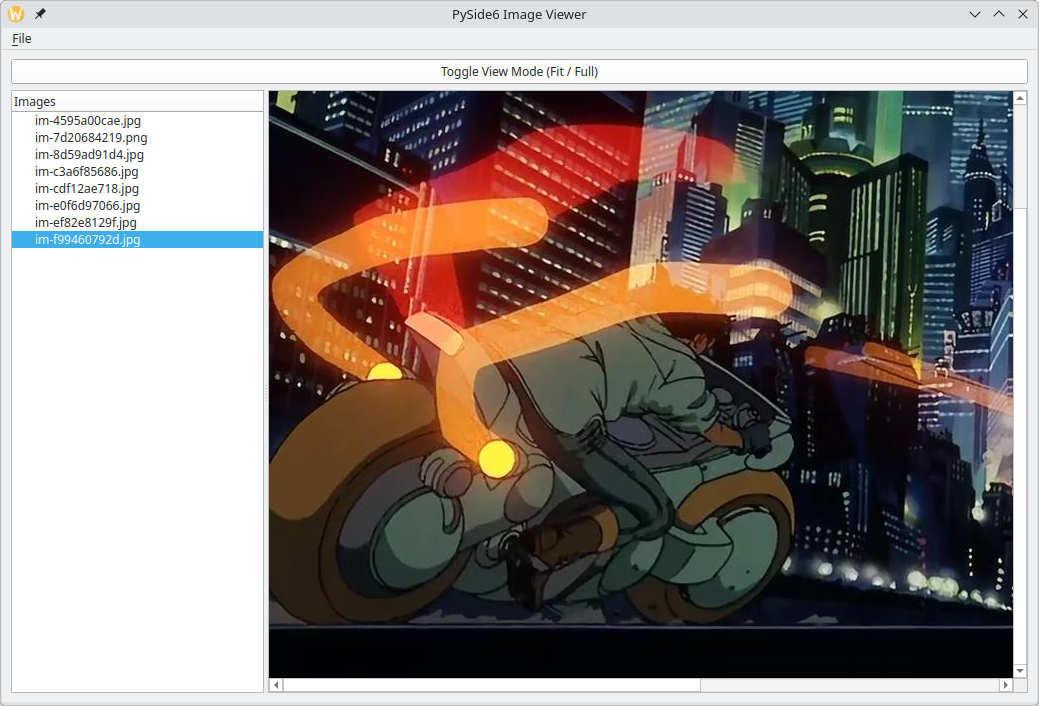
What I hadn't realized yet, was that correctness and coherence are not interchangeable, and the latter is far more important to code - is in fact the necessary precondition for correctness.
Swelled with the pride of wielding this newfound power, I became more ambitious,
adding keybinds and features. After another AttributeError or two we got to
some working code, but when I peeked at what it was doing, something didn't sit
right with the way the keybinds were implemented:
Is there a better way to handle the J/K keybinds?
GPT: Yes — there’s a much cleaner and more “Qt-ish” way than using an event filter, which is a bit hacky... (goes on and on).
Thus we forged on together, adding features like displaying a small thumbnail in the tree-view alongside the image filename. As I opened up an editor to try the latest iteration GPT had compiled, the problems continued.
This is no good - the image viewer is unresponsive during thumbnail generation, and the tree-view now occupies way too much space, making the image label tiny
GPT: Good catch — both problems have real, underlying causes, not tuning issues...Both come from architectural mistakes, not your machine.
(I find GPT's use of bold, italic and bulleted lists to be disconcerting, by the way - as if the emphatic, strong formatting can stand in for judgment and discretion - ditto for the little tone of reassurance it likes to sprinkle into its responses - seeking to reassure me that the problems with the output are relatable man, it's not you man, this is just something difficult, you've got this)
Like the panning and the keybinds, GPT produced some code which has every appearance of working, spits out a bulleted-list informing me that it has done everything correctly, and then when I attempt to run it, the code is flawed in some very tangible way. When prompted to review the issues, GPT generally picks up on a more correct solution, but it begs the question why it didn't do it correctly in the first place.
Eventually I ran out of free credit on ChatGPT so I hopped over to try out Claude. To get a baseline, I decided to start from scratch. I prompted Claude by listing out the features and behaviors I had seen implemented by ChatGPT. Claude did a much better job, overall, though it interestingly chose to implement the dominant color extraction using k-means initially! As my free credits on Claude diminished, I found myself running into exactly the same types of oddball usability and code quality issues. There were series of iterations trying to sort-out some odd behavior with scrollbars, toggling image display modes, and things like that.
These small-but-telling types of issues might not even rise to the awareness of someone developing a server or web application, because they tend to be fiddly little issues. Issues that are small, appear in the corners, but indicate failure to properly imagine what a correct approach would look like. Issues that require a larger context in mind, and play into the expectations one would have of a polished application (e.g. the image viewer should not display a scroll-bar that only scrolls the height or width of a scrollbar itself - it should just eliminate the unnecessary scrollbar).
As the iterations continued over the next couple days, I had GPT and Claude both implement a thumbnail grid view along with some other functionality the original Tkinter app had. Claude seemed close, but it struggled to nail the transition between the normal image display and the thumbnail grid display. A person using the image viewer would immediately see that toggling between the views was broken, and looking at the code it was clear there were some architectural issues which prevented the mode-switching from working correctly.
At this point the little image viewer had grown from 150 lines to over 1000. I decided at this point to abandon AI iteration and instead use AI for small, specific questions when I got stuck. This was also the first time I was going to take real ownership of the code and begin making my own changes. And this is where I was struck with a new realization: all the code that had been produced, by itself, was more-or-less correct but there was no coherence among its members; it was a chimera.
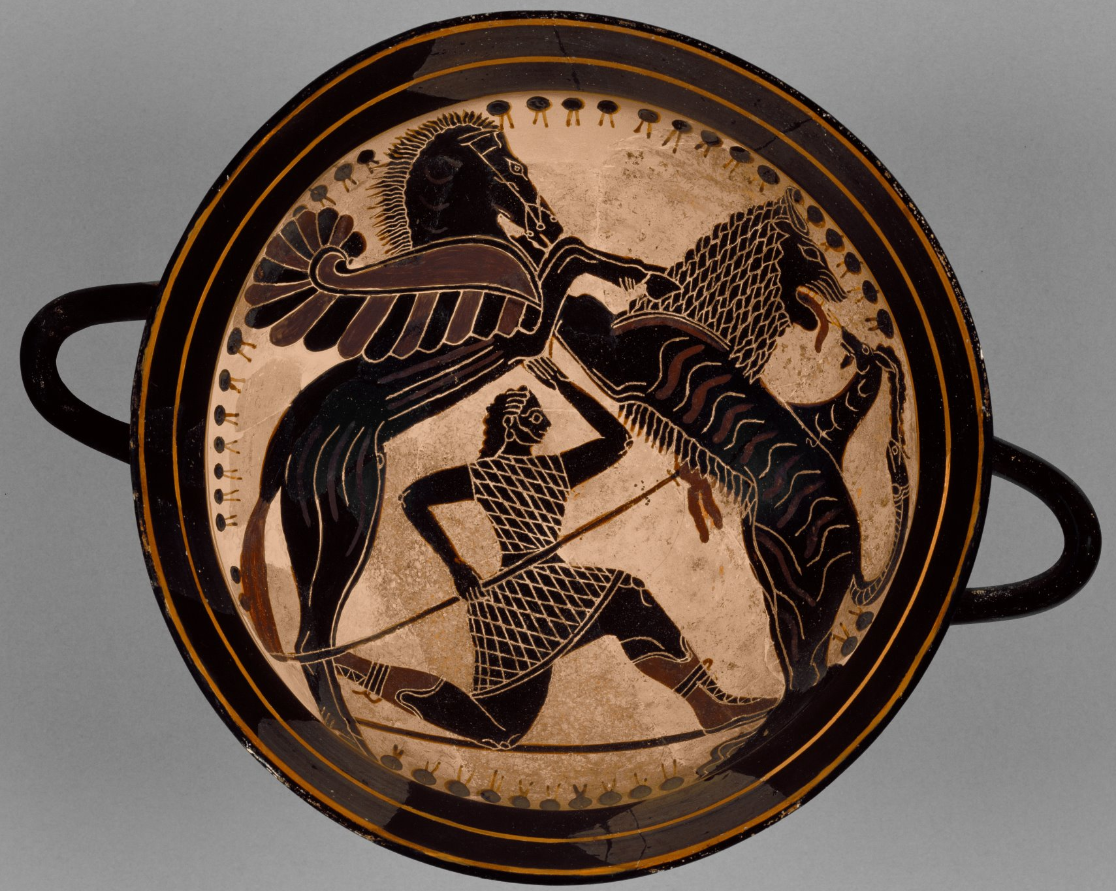
"Her breath came out in terrible blasts of burning flame."
The best example of this is the image canvas itself, which displays a scrollable / pannable view of the image and has logic for toggling display mode along with a context menu. When I looked at the code, I was surprised to see that the image canvas was implemented twice in two different ways - once for the main window and once for the standalone single-image view, despite sharing the exact same functionality. Even worse, the context menu code appeared three times - once for the main window image, once for the tree-view, and once for the standalone image detail view.
Looking more closely at the thumbnailing code, I saw that it, too, used two completely distinct approaches for generating the thumbnails. The thumbnail code for the tree-view (which displays a miniature between 16 and 64 pixels tall) would re-generate all thumbnails whenever I changed the size preference, then use a CSS to further resize them (?!). It very cleanly sent tasks to the Qt global threadpool, however, and had minimal book-keeping to keep state clean. The grid-view implemented a much better thumbnailing system with on-disk caching and signals to inform the application that a thumbnail was ready to be added to the grid, but suffered from brittle state-tracking and lots of unnecessary thread management code.
Refactoring the image canvas and context-menu significantly simplified the codebase and seemed like such an obvious no-brainer that I couldn't understand how it had been overlooked. Similarly, combining the best parts of the thumbnail-generation routines led to a cleaner design - the cache paths were unified, the brittleness was eliminated, and little discrepancies between the parallel implementations were unified. After re-working the code from top-to-bottom, I've become much more comfortable working with Qt and also feel a sense of ownership of the code which had before been lacking.
GPT / Claude both seem to fail in the following ways:
- Inability to understand or maintain invariants in the code or logic. Symptom of this is unnecessary or subtly redundant flags / settings / logic tests.
- Inability to refactor properly. Instead of refactoring, it is like when my kids mush the food around on their plate and say "see? I ate it!" Generally looks like redundant implementations.
- False positives for potential errors, leading to unnecessarily defensive code.
- False negatives for potential errors, leading to unsafe code.
- Difficulty conceptualizing state changes - this was especially apparent building a GUI application.
- Not choosing idiomatic implementations - for example panning had terrible performance, when a performant and idiomatic approach should have been used. Similarly choosing k-means for color determination when PIL's median-cut was available.
- Syntax and library usage errors. For this project it looked like confusing PyQT with PySide6, or attempting to use deprecated/obsolete APIs.
Nonetheless, at the end of all this, I have a pretty nice image viewer:
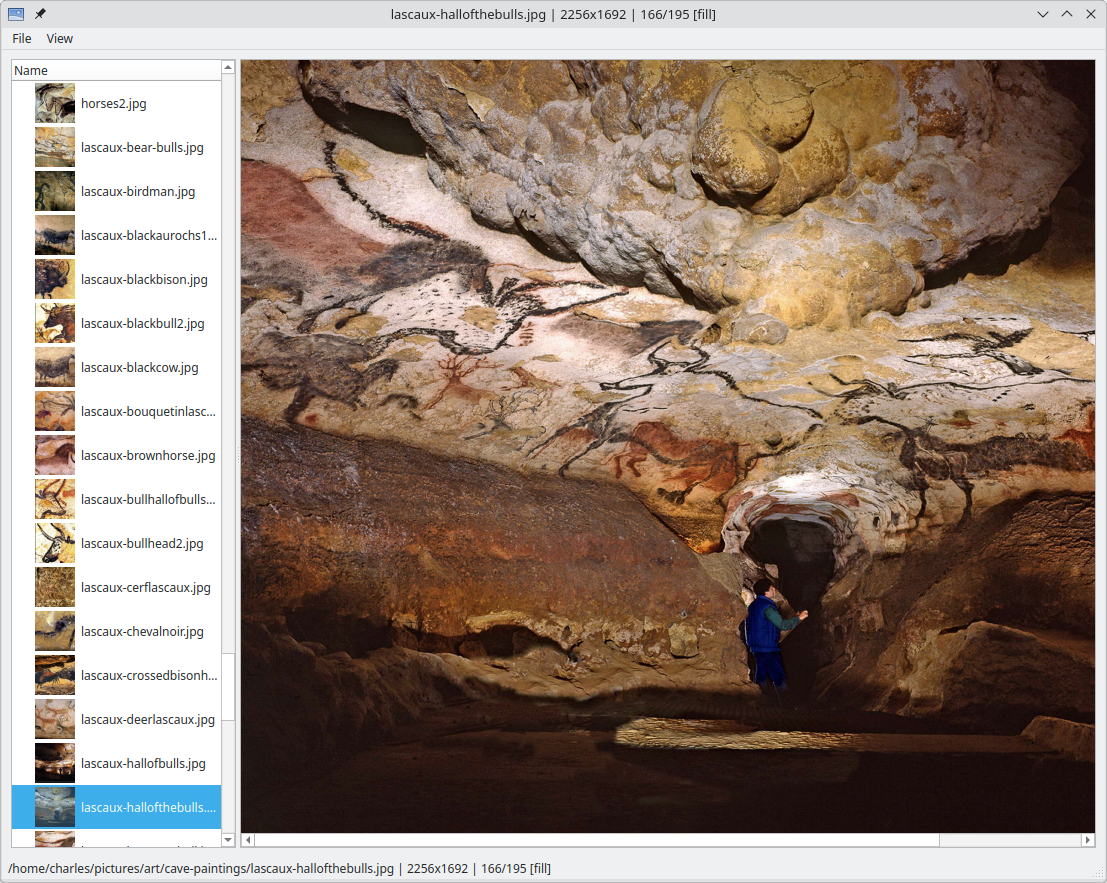
Can you imagine standing there? Just what in the hell were they thinking about when they made those paintings?
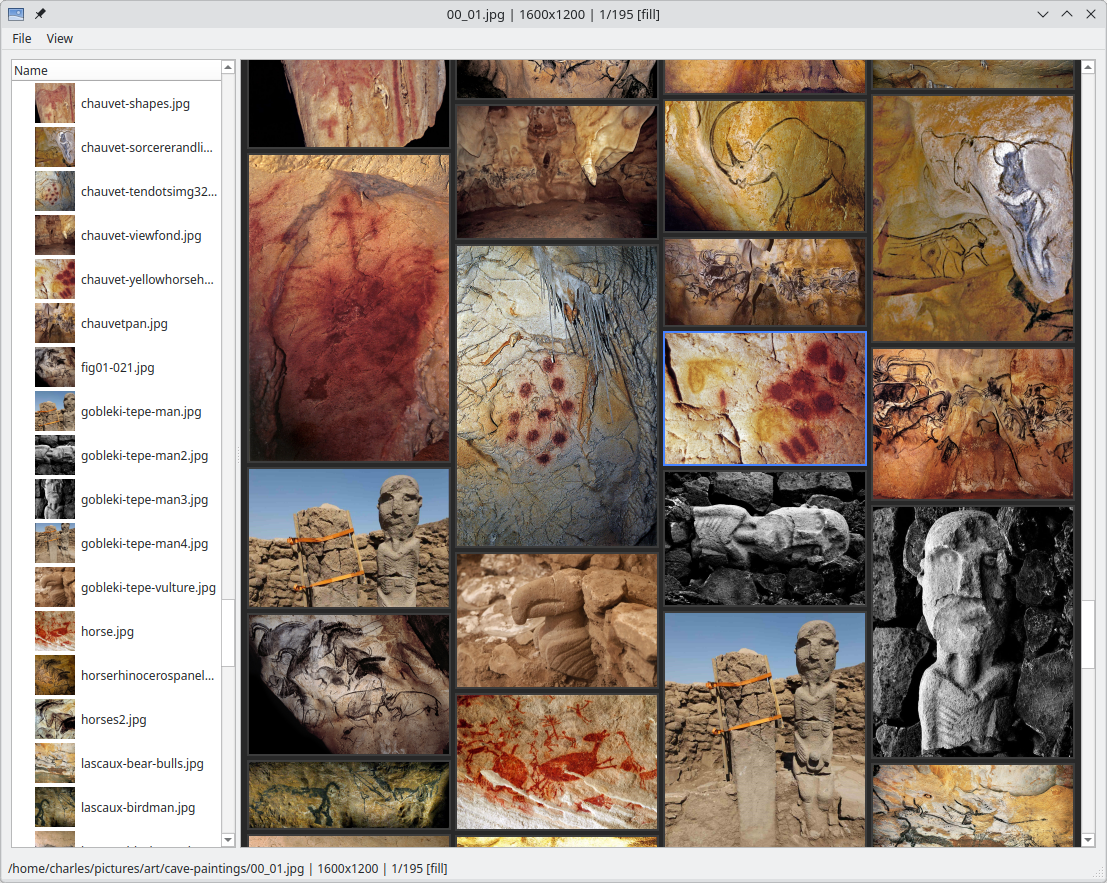
What I've come to see is that AI can be used to get off-the-ground quickly, whether it's helping to understand literature, or writing a working image viewer using an unfamiliar toolkit. But as I worked with GPT I could feel it driving to impart to me a feeling of confidence, assurance, proficiency - and this is where it fell apart. The sense of mastery is illusory, despite GPT's reassurances. It is performative - GPT is doing all the work, but continually telling me things like "you're on the right track now" (emphasis mine, in this case), "this is no longer a toy image viewer, you've built a production-grade image viewer" (emphasis GPT!). The image viewer GPT made was objectively barely-working shit riddled with fundamental design flaws. It displayed images, though, and for me that was enough to get started.
Overall I had an impression I had just witnessed a piece of theater. Looking behind the curtain, I see that the scenery I'd been admiring is merely an approximation of the real. The trees just painted cardboard, incapable of bearing fruit, as that is the sole province of God and His creatures.
For so I created them free and free they must remain.
Comments (0)
Commenting has been closed.